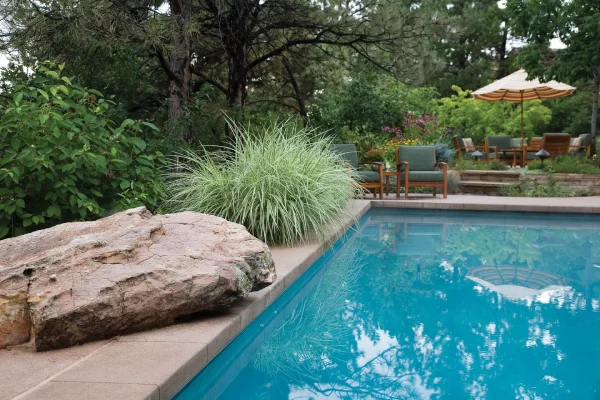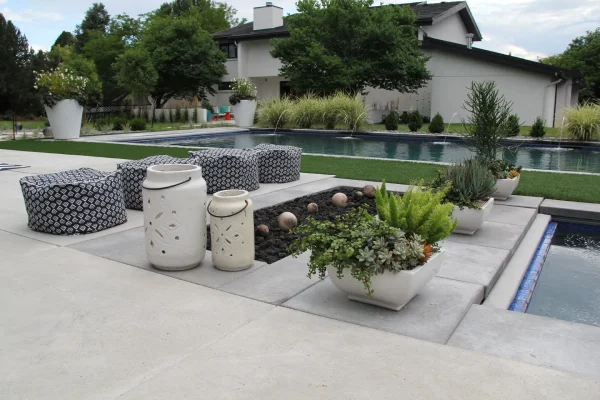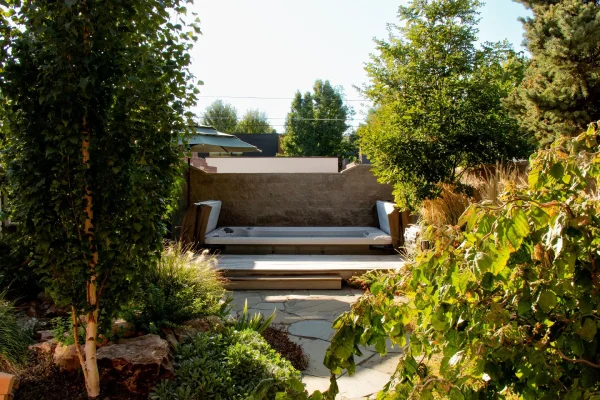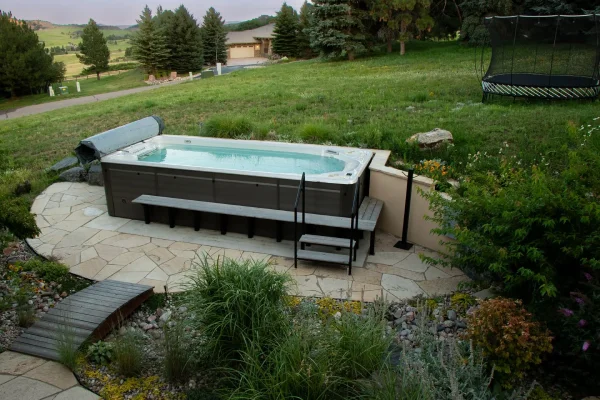

How to Add Privacy to Your Pool Area in Denver: Planting, Structures, and Smart Design
Denver pool & spa landscaping projects often reveal a frustration homeowners didn’t anticipate: you’ve invested in a pool, and now the space feels exposed to every neighbor and passing stranger. It’s a common outcome when privacy is treated as an afterthought rather than a design priority from the start.
Denver adds its own complications. Lot proximity in neighborhoods like Cherry Hills Village, Greenwood Village, and Highlands Ranch means second-story windows and raised decks frequently look directly into pool and spa areas. HOA fence height limits, Front Range wind exposure, and a semi-arid climate that punishes poorly selected plants all narrow the options. A fence alone doesn’t solve it. A few fast-growing shrubs don’t solve it either.
Solving the problem well means combining climate-adapted planting, engineered structures, and smart site layout into one unified plan, with each layer addressing what the others cannot. At Phase One Landscapes, we’ve been designing and building residential landscapes in the Denver Metro area since 1994, and pool privacy is one of the most consistent challenges we help homeowners work through. This guide covers how we approach it.
If you’re ready to move past research and explore what a professional privacy plan looks like for your site, schedule a consultation with the Phase One team.
Why Pool Privacy Is Harder Than It Looks
Denver neighborhoods create privacy challenges that catch homeowners off guard. Homes in Cherry Hills Village, Greenwood Village, and Highlands Ranch are often closer together than they appear on a map, and a neighbor’s second-story deck or upper bedroom window can have a direct view into your pool and spa from fifteen or twenty feet of elevation.
Strong Front Range winds add another layer of difficulty. A freestanding screen or lightweight trellis that looks right in a showroom won’t hold up to sustained western gusts without proper anchoring and engineering. Put one up without accounting for wind loads, and you’re replacing it within a season or two.
HOA rules in many Denver-area communities cap backyard fence heights at six feet. That’s enough to block a ground-level sightline, but it leaves your pool fully visible from any raised deck or second-story window nearby. A single tall fence is a starting point, not a privacy plan.
Start with Sightline Analysis, Not a Plant List
The first step in any pool privacy plan has nothing to do with selecting plants or choosing a pergola style. It’s about mapping what you need to block and from where. Our landscaping design/build expertise includes this analysis as part of every formal project engagement, because guessing where to place screening elements produces results that look arbitrary and underperform.
Here is how to approach the sightline analysis before your first consultation:
- Stand at the pool deck: Look outward in every direction. Note every view corridor: neighbor fences, windows, raised structures, and street-facing openings.
- Move to the lounge area: Repeat the exercise. Ground-level sightlines from a lounge chair are often different from those at pool edge, and the spa or hot tub is frequently more exposed than it appears.
- Identify elevation-based sightlines: Mark every upper-story window within sight. Estimate the horizontal distance between that window and your pool deck. A window fifteen feet above grade and thirty feet away needs a different solution than one at the same height but fifty feet out.
- Note what you want to keep: Mountain views and open sky are worth preserving. An effective privacy plan blocks the right things without turning your yard into a walled courtyard.
- Document the wind direction: On Denver’s Front Range, prevailing winds tend to come from the west and northwest. A privacy structure that also buffers wind adds real comfort to the space.
This analysis determines plant heights, structure placement, and layout priorities. For backyard pool landscaping projects in Denver, skipping this step is the most common reason privacy solutions disappoint after installation.
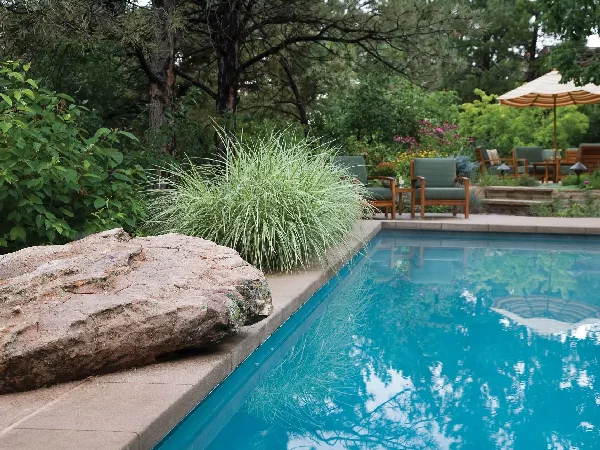
Layer One: Climate-Adapted Plants for Pool Area Screening
Plants are the most visually natural screening tool available, but in Denver’s semi-arid, high-altitude climate, plant selection isn’t a matter of picking whatever looks good at a nursery. Freeze-thaw cycles, intense UV, low annual precipitation, and strong wind exposure all influence whether a screening plant establishes well and performs over time. Our guide on designing for Denver’s microclimates covers these conditions in detail for homeowners who want to go deeper.
For pool screening, we think about plants in three functional categories:
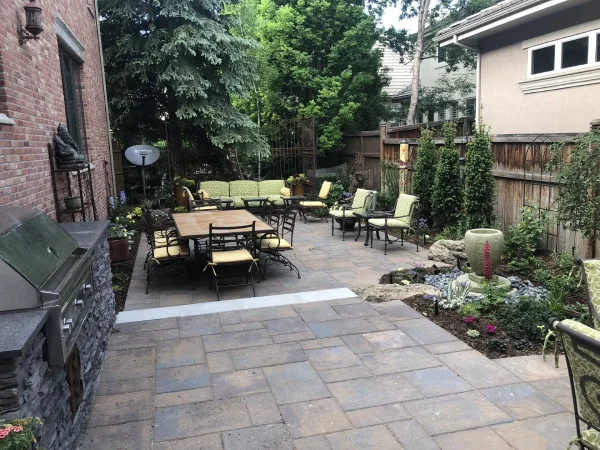
- Evergreen screening plants: For year-round coverage. Upright junipers and arborvitae varieties suited to Front Range conditions provide structure through winter when deciduous plants are bare. They grow slowly, so placing them correctly from day one matters.
- Tall ornamental grasses: For warm-season screening and movement. Colorado-adapted species establish quickly and add a softness that evergreens alone can’t provide. They die back in winter, so they work best as a secondary layer behind evergreen structures.
- Deciduous flowering shrubs: For seasonal layering and visual depth. Native options like serviceberry and native currants contribute to screening during the months you’re using the pool most, and they add seasonal color without demanding heavy irrigation.
Balancing Evergreens, Grasses, and Seasonal Plants
- Evergreens: Give year-round privacy but take several growing seasons to reach effective screening height.
- Ornamental grasses: Establish within one season but go dormant in winter, so they work best behind an evergreen layer.
- Deciduous shrubs: fill in density during pool season when you need it most, then drop back to let the evergreen structure carry the space.
- Pool microclimates matter: Splash, humidity, and reflected heat from pool coping all affect which plants thrive nearby. We factor placement around those conditions, not just general site exposure.
- Warranty and establishment monitoring: All installed plant material is backed by a one-year warranty, and our irrigation team monitors new plantings for three to four weeks after installation.
Spacing and Placement: How Close Is Too Close to the Pool?
Two practical rules guide where plants go relative to the pool edge:
- Keep larger shrubs and trees farther back: Root systems can interfere with pool plumbing and decking over time. Lower ornamental grasses and perennials work better in the near-pool layer.
- Place deciduous plants downwind of the pool: Leaf drop directly upwind increases cleaning demands. Positioning deciduous plants where prevailing winds carry debris away from the water simplifies upkeep considerably.
Sightline analysis and wind patterns should drive placement decisions more than aesthetics alone.
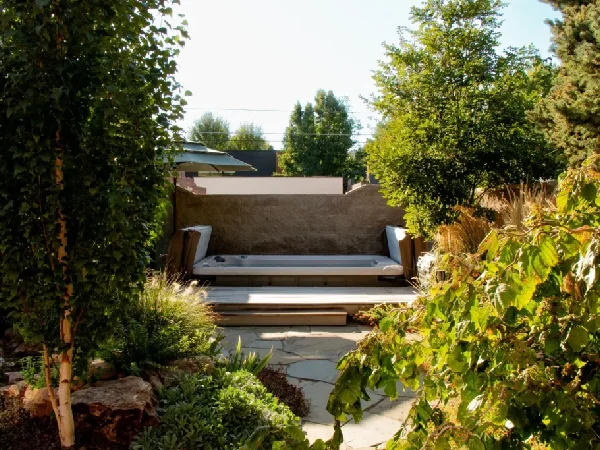
Layer Two: Structures That Create Privacy and Shade
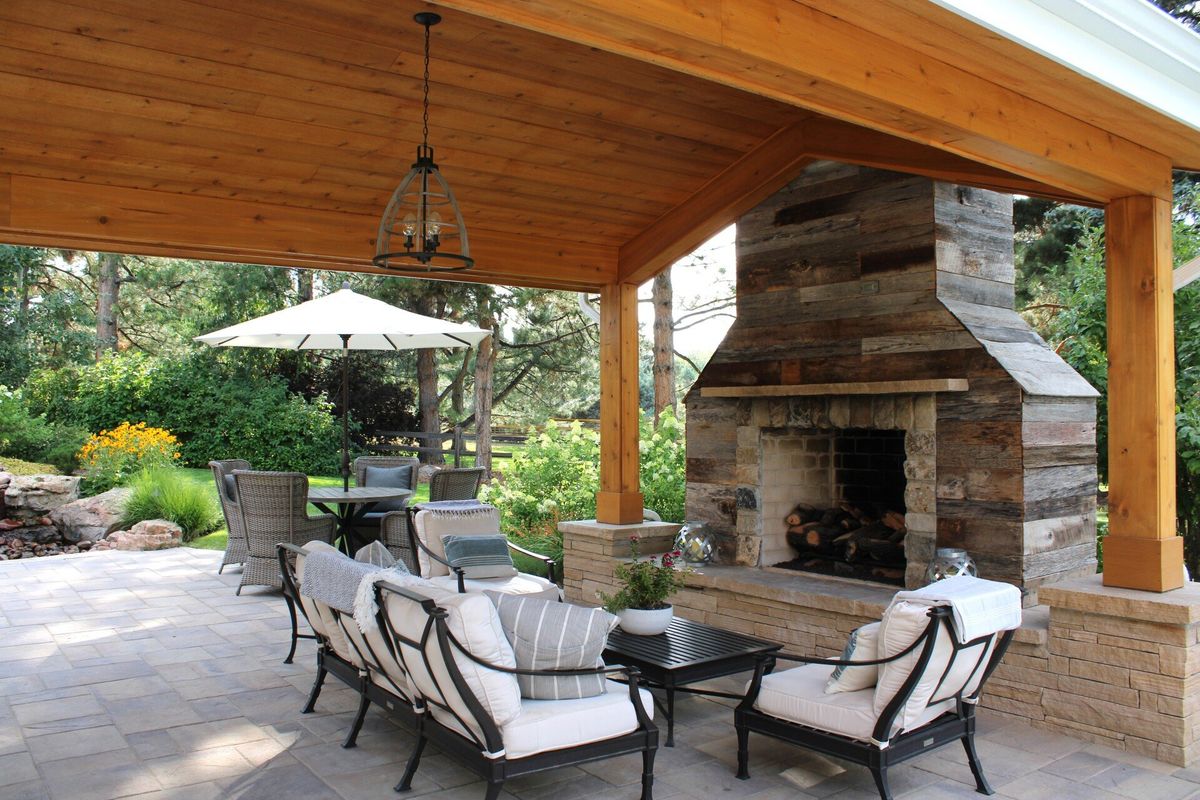
Plants solve many privacy problems, but structures solve the ones plants cannot: immediate privacy from day one, overhead coverage that blocks views from second-story windows, and wind protection that makes the space comfortable in spring and fall when Denver afternoons turn breezy.
The main structural options for pool-area outdoor living structures each address a specific problem:
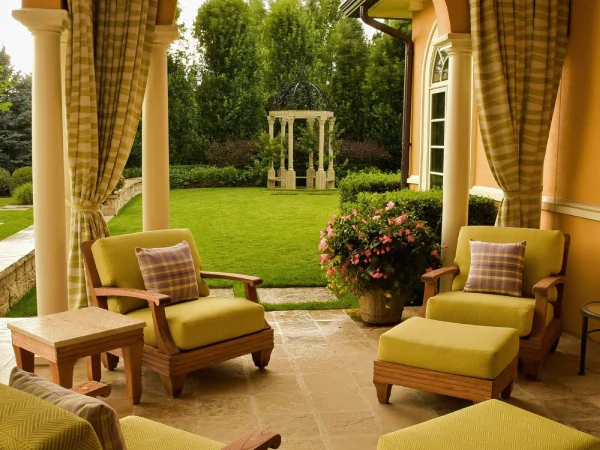
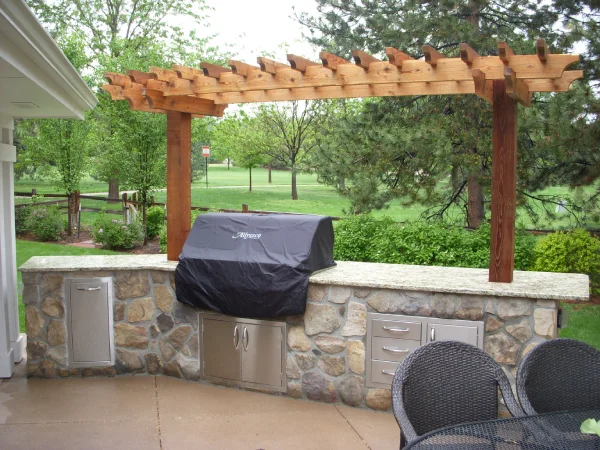
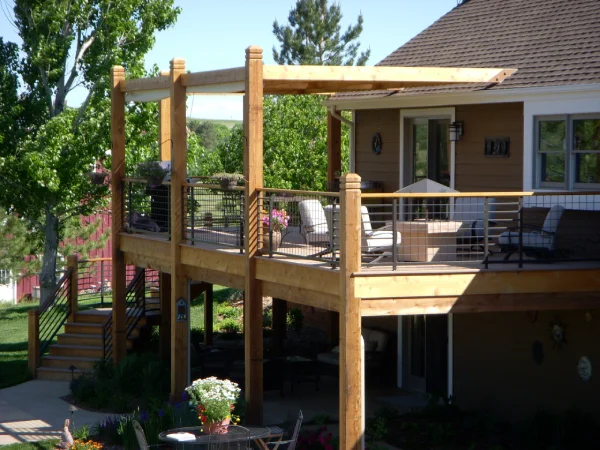
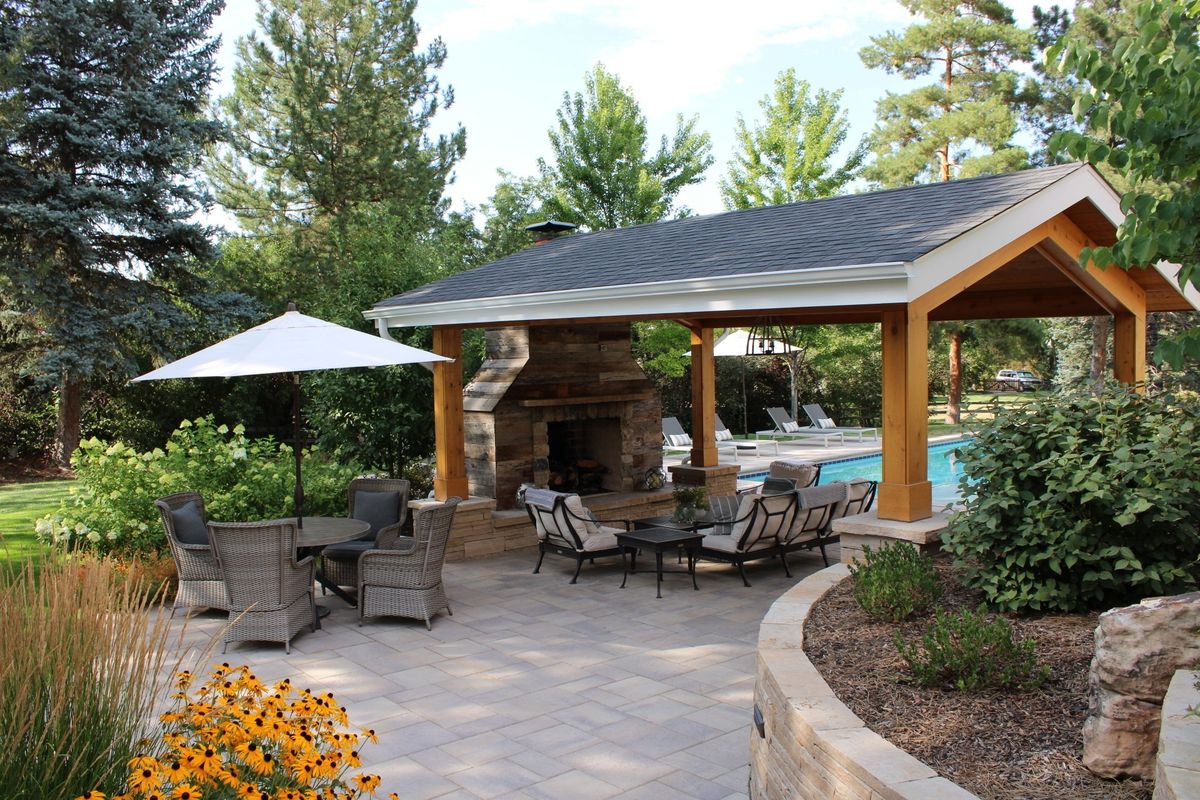
- Pergolas with climbing plants or fabric panels: Provide overhead coverage for vertical sightlines while maintaining an open feel. They work especially well over spa areas where the exposure is often directly overhead.
- Louvered pavilions: Allow adjustable overhead coverage so you control light, shade, and exposure based on time of day or season.
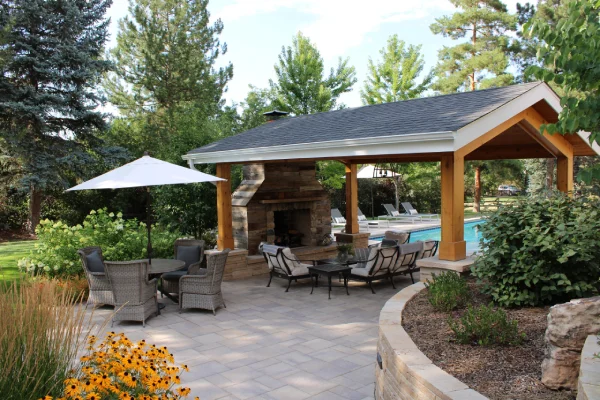
- Privacy walls and masonry screens: Built into the pool deck create a permanent enclosure that appears considered as part of the landscape rather than a bolt-on fix. These are the strongest performers for both privacy and wind protection.
- Slatted wood or metal screens: Provide partial screening without full enclosure. They work well for spots where you want to break a specific sightline without creating a walled feeling.
- Code-compliant fencing: Within HOA and municipal limits forms the base perimeter. By itself, it rarely solves the privacy problem, but as the foundation layer for plants and structures above it, it’s the right starting point.
Every structure we build for Denver pool & spa landscaping projects is engineered for local wind loads and freeze-thaw conditions. A pergola footing adequate for milder climates can fail in a Denver winter. Materials that look fine on day one but aren’t rated for UV exposure and thermal expansion won’t look fine in year three. We back all hardscape elements with a two-year limited warranty, which reflects our confidence in how they’re specified and built.
HOA Rules and Setback Considerations in Denver Neighborhoods
Denver-area HOA and municipal rules vary significantly by community. Key constraints to know before you design:
- Fence and structure height limits: Communities like Highlands Ranch, Greenwood Village, and Parker have HOA covenants capping fence heights and governing structure placement.
- Mature plant height restrictions: Some HOAs limit plant height within designated buffer zones near property lines.
- Municipal setback requirements: How close a wall or pergola, for example, can sit to a property line varies between Denver proper and surrounding municipalities.
- Permit requirements: Structures above certain heights or with concrete footings typically require a building permit, and HOA approval may be required on top of that.
We treat permit research and HOA compliance as part of the design process. Bringing a privacy structure into compliance after it’s built is expensive and disruptive. Knowing the constraints before we design means the solution we propose is actually buildable on your specific lot.
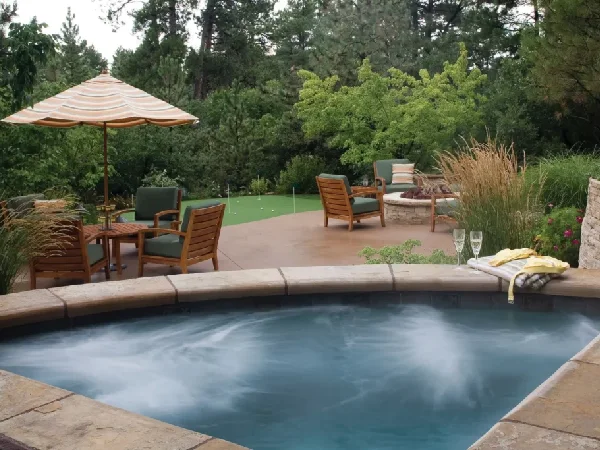
Layer Three: Smart Pool Patio Design and Layout
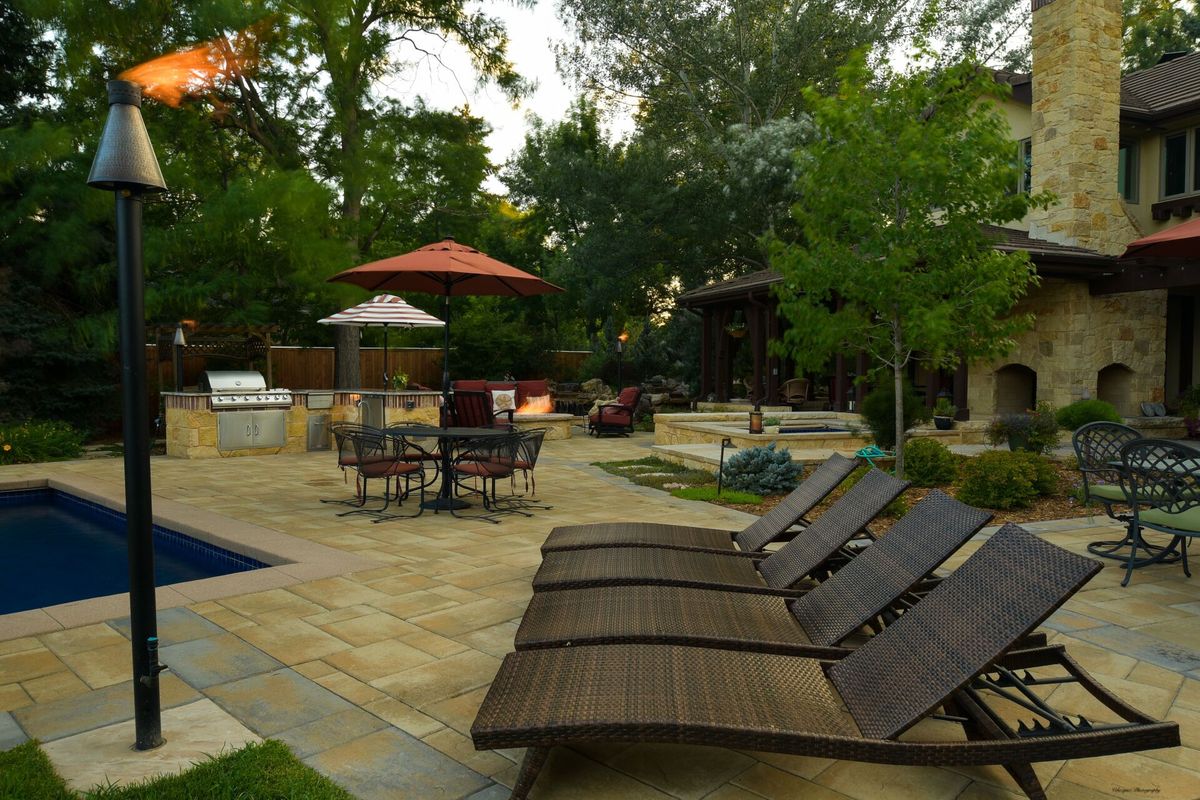
The least visible layer of pool privacy planning often has the biggest impact. How your pool deck, lounge areas, and spa are positioned relative to your property lines and neighbor sightlines determines how much screening work plants and structures have to do in the first place.
Key layout decisions that reduce privacy exposure without adding extra structures:
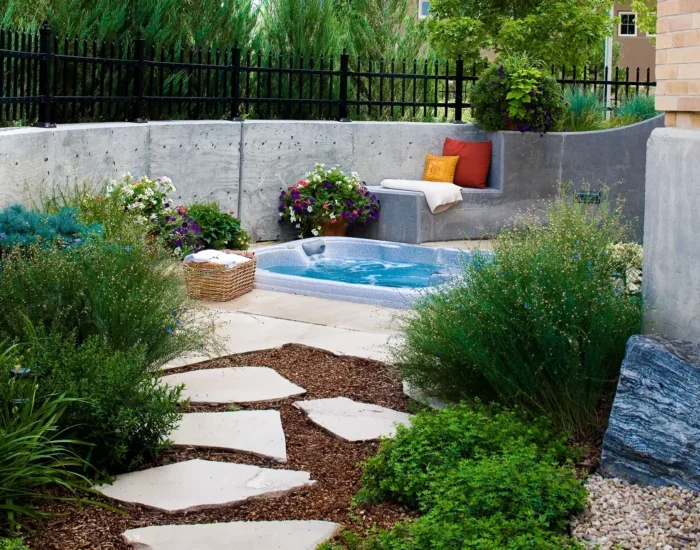
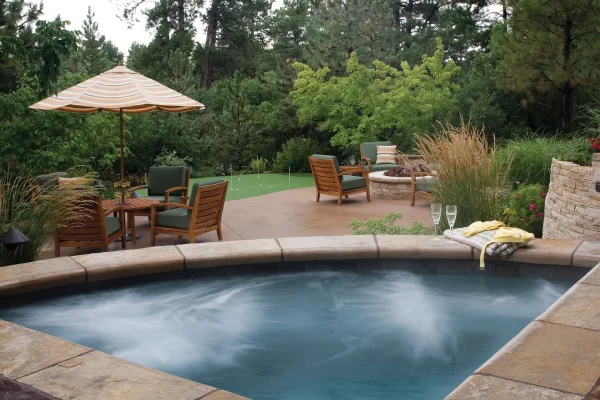
- Position the spa or hot tub in a naturally sheltered corner: Rather than the most open area of the yard. Pool and spa landscaping projects in Denver frequently reveal that the spa was placed where it was easiest to plumb, not where it would feel most private. Moving it during planning costs nothing; moving it after installation is a significant expense.
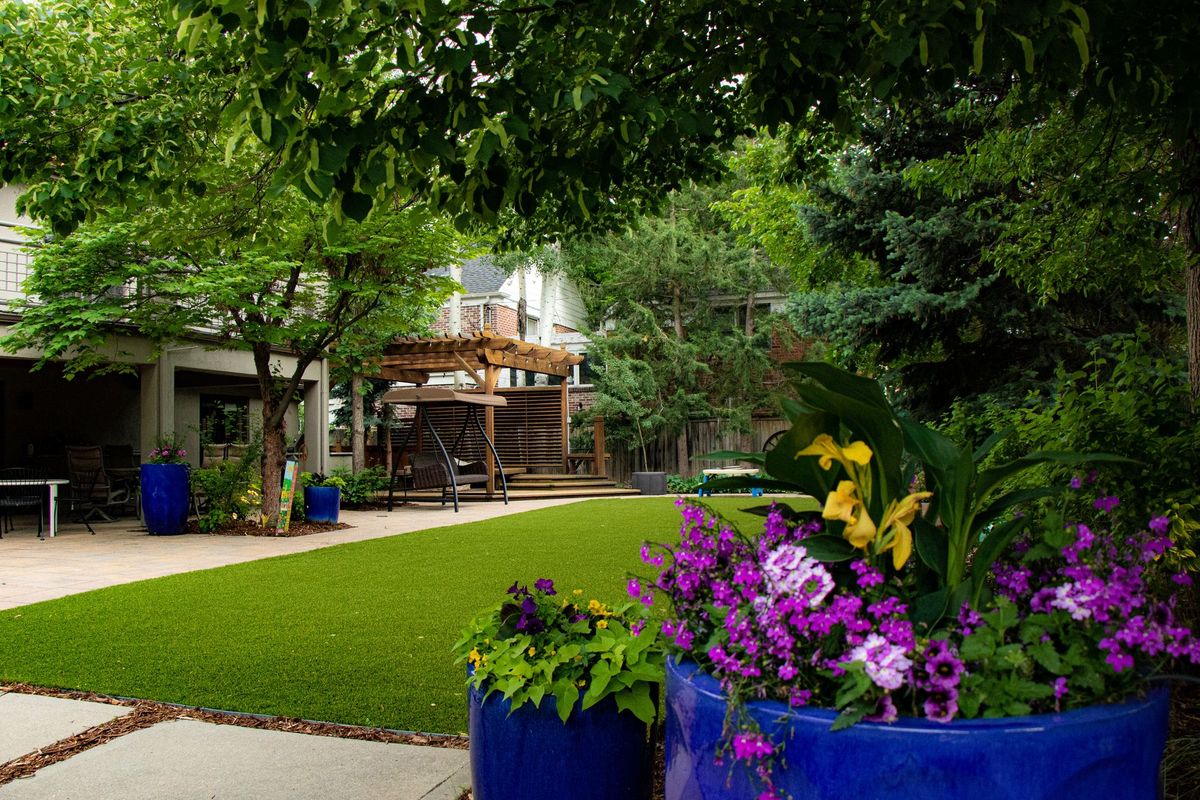
- Use grade changes and raised planting beds: Adds vertical screening without a fence. A planting bed raised eighteen inches creates meaningful ground-level privacy while adding visual interest.
- Orient the primary seating area away from the most prominent neighbor sightline: Rotating your lounging zone even modestly can change which sightlines matter most for the space where you spend the most time.
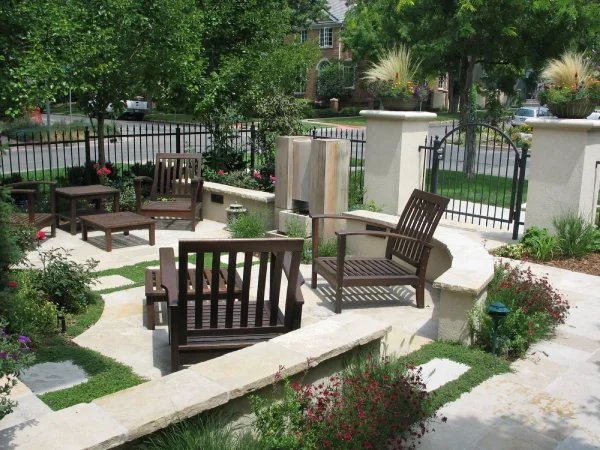
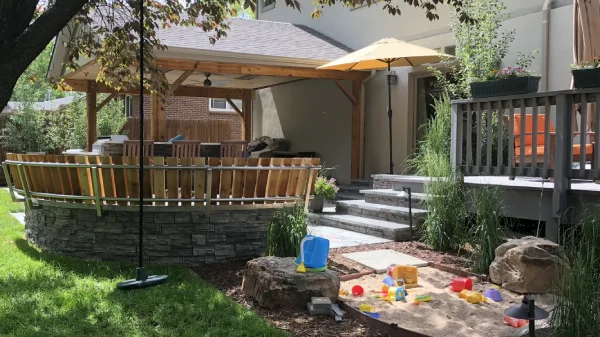
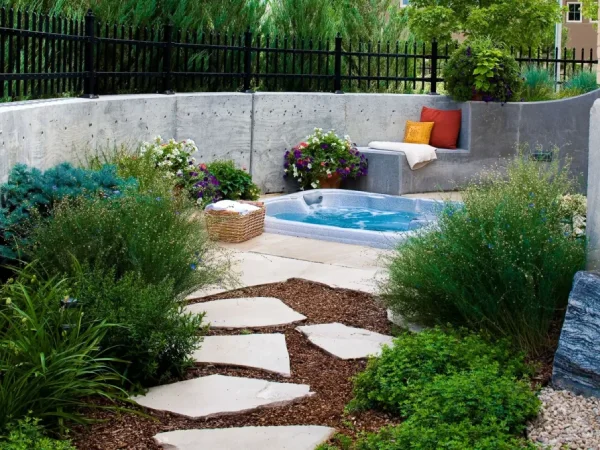
- Use hardscape walls and planter walls as dual-function elements: A seat wall that also serves as a planter at the pool edge reduces the viewing angle from the neighbor’s yard while adding usable seating surfaces.
Pool patio design decisions made during the site-planning phase are comparatively easy to adjust on paper. After the pool shell is in the ground and the deck is poured, reworking the layout of the pool deck and surrounding hardscape is costly. Pool deck landscaping projects that start with a privacy-aware layout consistently need less remedial screening work later, and that’s the case for investing time in layout early, even when it means a longer design phase.
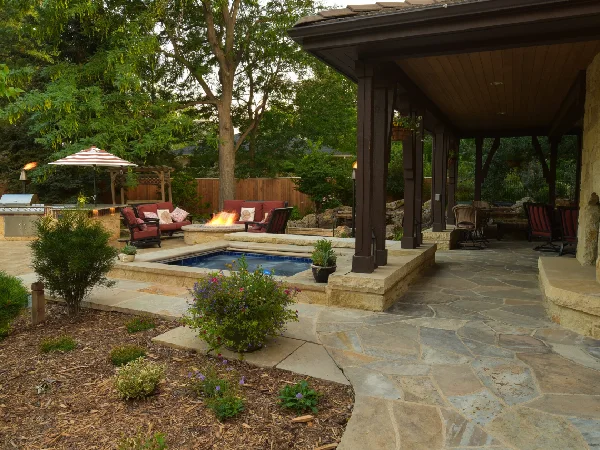
How a Design-Build Approach Protects Your Privacy Plan
A layered privacy plan only holds together when one team is responsible for designing and building all three layers. When design and construction are handled by separate firms, details get lost between them:
- The specified evergreen screening species gets substituted at the nursery.
- The pergola footing shifts six inches from where the designer placed it.
- The privacy wall ends up shorter than the plan called for.
None of those changes gets reported back. You discover them when the project is done and the space doesn’t feel the way the design promised.
Our in-house design-build model keeps the same designer and project manager involved from the initial sightline analysis through the final walkthrough. The person who mapped your view corridors, selected your screening plants, and specified your pergola dimensions is also the person who oversees the construction crews. That’s what backyard pool design/build work in Denver should look like, and it’s rare among local landscape firms. Our landscape architecture design/build process is structured around this continuity from the first day of design through project close-out, and our work reflects that same no-handoff commitment.
Ready to talk through your pool privacy goals with a team that designs and builds Denver backyards from concept through completion? Request an appointment to schedule a site visit and sightline analysis.
What Phase One Homeowners Can Expect from the Process
Here is what the experience looks like from first contact through completion:
- Initial consultation and site visit: We come to your property, walk the pool area with you, and conduct a preliminary sightline analysis. This is where we identify what needs to be blocked, what you want to preserve, and where the wind exposure is coming from.
- Design development: Your assigned designer develops planting, structures, and layout as a unified plan. You review it, ask questions, and request changes. The designer handles those revisions, so nothing gets distorted through a hand-off.
- Client review and refinement: We present budget analysis alongside the design so you understand what the plan costs before construction begins. Changes to scope are documented as change orders with clear explanations.
- Construction by the in-house team: The same designer who developed your privacy plan oversees construction. Our crews execute the work; your designer confirms the result matches the intent.
- Post-installation follow-through: Our irrigation team monitors new plantings for three to four weeks after installation. We schedule a 30-day satisfaction check-in, and your project is backed by a one-year plant warranty and a two-year limited hardscape warranty.
Phase One Landscapes has been delivering residential landscapes in Denver since 1994. About 60 percent of our new clients come through referrals, which reflects what our processes produce when they’re run the right way. See what our customers have to say.
Common Questions About Denver Pool and Spa Privacy
These are the questions we hear most often from homeowners when wanting to plan refinements to a pool or spa landscape in the Denver area.
How tall does a privacy screen need to be to block a second-story window?
It depends on the distance between the window and your pool. A window fifteen feet above grade and thirty feet away requires a taller or overhead solution than one at the same elevation but fifty feet out. A pergola or louvered overhead structure is often the most practical answer for steep vertical sightlines, because height alone in a planting or fence rarely solves the geometry.
What are the best evergreen plants for pool screening in Denver?
Upright junipers and arborvitae varieties suited to Front Range conditions are strong performers for year-round structure. Columnar forms work well in narrow planting strips near the pool. Plant selection must account for the pool microclimate, including splash and reflected heat, as well as any HOA rules governing mature plant height within setback zones.
Can I add privacy to an existing pool area without a full redesign?
Yes, in many cases targeted additions work well. A slatted screen, a pergola extension over the spa, or supplemental evergreen planting can address a specific sightline problem without touching the pool itself. If the pool’s layout creates fundamental exposure challenges, a more integrated approach will deliver better long-term value, but starting with targeted fixes is a reasonable first step.
What does pool privacy landscaping cost in Denver?
Scope varies widely depending on whether the project involves planting only, structures only, or a fully integrated plan combining both. Most first-time client projects at Phase One land in the $80,000 to $120,000 range for full residential landscape work, with privacy elements varying based on complexity and site conditions. A consultation is the right way to get an accurate number for your specific yard.
Do I need a permit for a pergola or privacy wall near my pool in Denver?
Often yes, depending on height, footing type, and whether the structure attaches to the house. Denver and surrounding municipalities have different thresholds, and HOA approvals may also be required. We handle permit research as part of the design-build process so the solution we propose is compliant before construction begins.
Ready to Plan Your Denver Pool Privacy Project?
Effective pool or spa area privacy in Denver comes together through three layers, each building on the last:
- Sightline analysis: Maps exactly what needs to be blocked and from where before any plant or structure is specified.
- Layered planting and engineered structures: All sized and positioned to address both ground-level and overhead sightlines.
- Smart layout decisions: Made during the site-planning phase so the pool, spa, and lounge areas are positioned to minimize exposure from the start.
Getting all three right requires one accountable team that designs and builds the whole system from the same set of plans.
Phase One Landscapes has been serving the Front Range since 1994, with a Denver landscaping team that brings real depth to this work. The first conversation is about understanding the specific sightlines, conditions, and goals for your space. Reach out to schedule a consultation with Phase One, and let us design a privacy plan that transforms your pool area into the outdoor retreat you invested in.
For a broader look at how we approach a full pool and spa landscaping project, visit our pool & spa landscaping page. For related information, see our guide on designing a Denver backyard that works all year.
About Phase One Landscapes
At Phase One Landscapes, we put your goals at the center of every design. With years of hands-on experience across Colorado, a passion for creativity, and a commitment to honest, friendly service, we’d be honored to guide your landscape transformation.
Ready to bring your dream yard to life? Contact us today for a consultation—let’s start the next chapter of your outdoor story together.
We can’t wait to hear your ideas—and turn them into reality!

Written by Dave Graham
Dave is a Denver native and co‑founder of Phase One Landscapes. After earning a B.S. in Landscape Architecture from Iowa State University in 1981, he worked as a laborer, construction foreman, and designer, learning residential design/build from the ground up. In 1988 he partnered with Dennis Frank to launch Phase One Landscapes, which has delivered hundreds of landscapes across Greater Denver. Dave prioritizes quality and service and remains involved with clients and teams. The firm’s projects have earned ALCC awards, appeared on ASLA Garden tours, and been published in national and local magazines.